
How to Maintain a Vibrating Screen?
2026-09-27

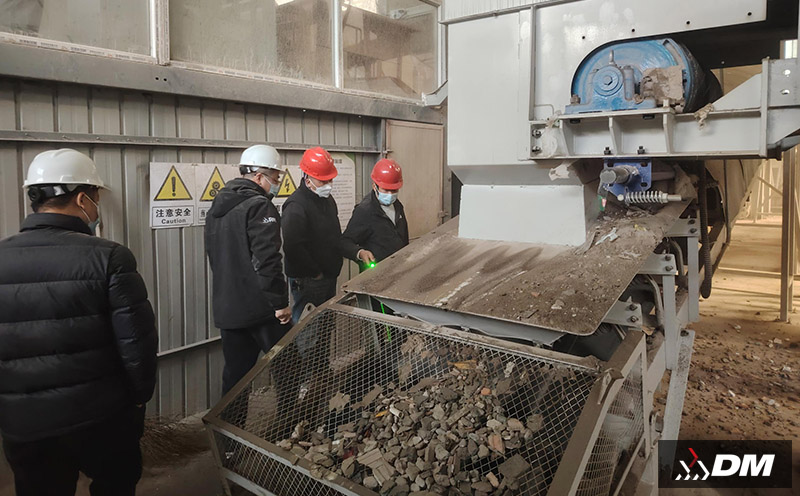
China's construction waste recycling industry is entering a new development phase.
For many years, construction waste was typically transported long distances from demolition sites to centralized disposal areas. While this model was widely adopted, it often created significant challenges related to transportation costs, dust emissions, traffic congestion, and project scheduling.
In 2026, China's urban renewal strategy continues to accelerate. Major investments are being directed toward the renovation of aging residential communities, industrial redevelopment projects, urban village reconstruction, underground utility upgrades, and public infrastructure improvements. These projects are generating substantial quantities of construction and demolition waste.
As a result, more contractors and municipal authorities are adopting a new approach:
Instead of transporting materials dozens of kilometers away, waste is increasingly processed directly at or near demolition sites.
This trend is creating new opportunities for mobile crushing and screening equipment.
Transportation has traditionally represented one of the largest expenses in construction waste management.
A typical urban demolition project may generate:
For a project producing 5,000 tons of construction waste per day, transportation expenses can account for a substantial percentage of operating costs.
When demolition sites are located within densely populated urban districts, logistics become even more challenging.
Common issues include:
For many contractors, reducing transportation distances has become one of the fastest ways to improve project profitability.
To address these challenges, many recycling operators are deploying mobile crushing and screening plants directly on-site.
A typical mobile recycling solution may include:
Used for primary crushing of:
Maximum feed size:
900–1000 mm
Suitable for:
Advantages include excellent particle shape and flexible operation.
Used to separate materials into multiple fractions:
A redevelopment project in Eastern China recently adopted an on-site construction waste recycling system.
280–350 TPH
10 hours
Approximately 87%
Compared with traditional transportation and landfill disposal, the project reduced material transportation volume by more than 70%.
Environmental standards continue to become stricter.
Recent policy initiatives supporting waste reduction, recycling, and resource utilization are encouraging cities to improve solid waste management systems and increase recycling rates.
Construction waste recycling plants now increasingly incorporate:
Reducing dust emissions.
Improving environmental performance.
Especially important for urban projects.
Providing real-time production data and environmental monitoring.
Market acceptance of recycled aggregates is improving.
Applications include:
As recycled material quality improves, many cities are encouraging wider adoption of recycled building materials within urban renewal projects.
This creates additional revenue opportunities for construction waste recycling plants.
Looking ahead, several trends are becoming increasingly clear:
To reduce transportation costs.
To support circular economy objectives.
To improve operational efficiency.
To meet evolving regulatory requirements.
As China's urban renewal strategy continues to expand, construction waste recycling plants located closer to demolition sites are expected to become a key component of sustainable urban development.
Shanghai Dongmeng continues to provide advanced crushing and screening solutions designed to help customers improve resource recovery, reduce operating costs, and achieve long-term environmental compliance.
Related Articles
Boost Quarry Profit with Fixed Cone Crushing
2026-07-07 More+A practical guide for quarry and aggregate producers on using a fixed cone crush...
Tracked Mobile Screening Machine: Solutions to Quarry and Construction Waste Screening Pain Points
2026-07-31 More+Explore how tracked mobile screening machines solve low efficiency, poor flexibi...
Basic Configuration of River Pebble‑Crushing Production Process
2026-08-06 More+Among water‑conservancy projects, highway‑bridge construction and aggregate‑proc...
Centralized Construction Waste Disposal Solution: Complete Matching Equipment Scheme From Dongmeng
2026-08-20 More+Against the background of global urban renewal and strict environmental‑protecti...
Mobile Secondary Crushing: Tracked Cone Crusher for Remote Sites
2026-07-24 More+Need high-quality crushed aggregate at remote mines and construction sites? Lear...
How Moisture Content Affects Construction Waste Plant Performance
2026-06-12 More+Moisture Content Is Often the Hidden Factor Behind Poor Plant PerformanceWhen ev...
Urban Construction Waste Treatment Project Case — One-stop Service from Dongmeng Heavy Industry
2026-06-25 More+In the context of urban renewal and the construction of zero-waste cities, the d...
Construction Waste Treatment Solutions: Process Design and Equipment Matching Tips
2026-08-31 More+1. Core Pain Points Faced by Current Construction Waste Recycling ProjectsC...
Application Guide for Crushing and Screening Products in Construction Waste Resource Utilization
2026-04-24 More+Focusing on the core goals of reduction, recycling and harmless treatment for co...
Mobile Cone Crushing for Remote Road Jobs
2026-07-03 More+This article explains how a tracked mobile cone crusher can help contractors and...