
How to Maintain a Vibrating Screen?
2026-09-27

Among water‑conservancy projects, highway‑bridge construction and aggregate‑processing industries for urban infrastructure all over the world, river pebble crushing is an extremely common processing method for manufacturing high‑quality manufactured sand. River pebbles feature hard texture and low impurity content, making them premium natural stone raw‑materials. Nevertheless, their high Mohs‑hardness easily wears out wearable spare parts, and ordinary crushing machines frequently suffer from excessive flaky particles and unstable production capacity. The river pebble crusher serves as the core equipment of the whole production line. It processes raw stones into crushed‑stone and manufactured‑sand complying with construction standards of multiple countries through multi‑stage crushing, shaping and screening procedures. Overseas sand‑and‑gravel practitioners who intend to build low‑wear and steadily‑running production lines shall seek customized schemes from an experienced river pebble crusher manufacturer. Shanghai Dongmeng boasts rich experience in researching, developing and exporting hard‑rock equipment. It optimizes machine structures in view of the hard and wear‑resistant traits of river pebbles and supplies fixed‑type and mobile complete crushing equipment for sand‑gravel projects worldwide.
1. Raw‑material Characteristics and Process‑building Principles for River Pebbles
River pebbles reach 6‑7 on the Mohs hardness scale and deliver outstanding compression resistance. Hence impact crushers are not suitable as primary‑crushing hosts, as blow bars will wear rapidly during long‑time operation. The international sand‑gravel industry generally adopts the processing concept of extrusion crushing first and impact‑based shaping afterwards. The workflow includes primary crushing, secondary‑fine crushing, sand‑making shaping and impurity‑removal screening. Operators choose fixed production lines or mobile crushing stations according to hourly throughput, finished‑stone specifications, site conditions and local environmental‑protection regulations. The devices adapt to various working scenarios such as riverside mining zones in Southeast Asia, open‑air construction sites in Africa and sand‑gravel processing plants in the Middle East.
2. Standard Equipment Setup for Fixed River‑Pebble Crushing Production Lines
2.1 Primary‑crushing Section: Jaw Crusher
A vibrating feeder evenly delivers bulky river pebbles to the jaw crusher for the first‑time crushing. Its extrusion‑based working mechanism resists impacts from hard rock and handles large‑size raw stones. The Shanghai Dongmeng PEW European‑style jaw crusher adopts thickened high‑manganese‑steel jaw plates and an enhanced deep crushing‑chamber design to prevent blockages and support round‑the‑clock non‑stop operation.
2.2 Secondary‑fine‑crushing Section: Hydraulic Cone Crusher
Crushed stone is conveyed to the cone crusher, which breaks river pebbles by means of laminated crushing. This machine efficiently cuts down flaky particles and its wearable parts enjoy a longer service life than those of impact crushers. Shanghai Dongmeng multi‑cylinder hydraulic cone crusher is fitted with iron‑passing protection and hydraulic cavity‑clearing functions. It yields automatically when non‑crushable impurities enter the cavity and reduces jamming breakdowns.
2.3 Sand‑making and Shaping Section: VSI Impact Sand‑maker
Natural river pebbles own smooth surfaces, and simple extrusion crushing will produce aggregate with poor particle shapes. The VSI sand‑shaper works on the rock‑on‑rock principle. Stones collide and polish one another to optimize grain form and adjust the fineness modulus of manufactured sand so as to produce premium‑grade sand meeting overseas infrastructure standards. The rotating speed of Shanghai Dongmeng impact sand‑makers can be adjusted for coarse, medium and fine‑sand production modes.
2.4 Screening, Washing and Environmental‑friendly Auxiliary Equipment
The complete production system also comprises circular vibrating screens, wheel sand washers, fine‑sand recycling machines and dust‑removal equipment. Vibrating screens classify aggregate and send unqualified stones back into the crusher for repeated crushing. Sand washers clear mud and stone powder, and dust collectors control dust emissions to satisfy environmental‑protection rules in different nations.
3. Complete Configuration Scheme for Mobile Crushing Equipment
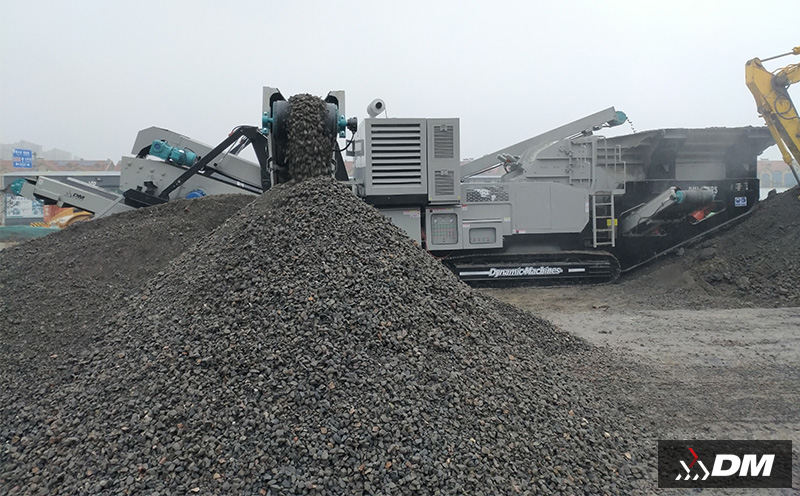
Many riverside raw‑material sites are scattered and construction sites demand frequent relocation. In this case wheel‑type or crawler‑mounted mobile‑crushing stations are preferred. No concrete foundation construction is required, and the machines can travel straight to stone‑mining locations for on‑site processing and cut expensive stone‑transport expenses. Shanghai Dongmeng mobile crushing units are freely configurable with jaw crushers, cone crushers and screening hosts, well‑suited to short‑term overseas engineering projects located in remote zones.
Control the grain‑size of feeding stones during daily manufacture and forbid oversized raw‑materials from entering the crushing cavity. Inspect vulnerable components including cone‑crusher liners and sand‑maker impellers on a regular basis. Adjust the discharge gap according to finished aggregate specifications. Carry out rust‑proof maintenance in humid‑rainy districts and clean dust‑proof assemblies frequently in sandy‑wind regions. Install an electric‑control overload‑protection system to lower unexpected equipment failures.
A professional and reliable river pebble crusher manufacturer can not only supply complete crushing machinery, but also provide overseas purchasers with production‑line planning, operator training, multilingual operation manuals, remote technical guidance and original spare‑part supply services. Committed to the manufacturing and export of hard‑rock crushing machinery, Shanghai Dongmeng possesses abundant practical experience on overseas river‑pebble aggregate projects. It modifies equipment configurations for raw‑material traits in diverse regions, assists worldwide sand‑gravel processing plants in cutting the consumption of wearable accessories, upgrading finished sand quality and boosting comprehensive economic benefits.
Related Articles
Solutions to the Difficulties of Urban Construction‑Waste Governance
2026-08-12 More+With accelerated urbanisation, continuous old‑town demolition and municipal reno...
Concrete Crushing Machine: A Detailed Introduction to Core Crushing Equipment for Global Aggregate and Solid Waste Treatment
2026-07-09 More+In global mining exploitation, aggregate processing, construction waste recyclin...
Urban Construction Waste Treatment Project Case — One-stop Service from Dongmeng Heavy Industry
2026-06-25 More+In the context of urban renewal and the construction of zero-waste cities, the d...