
How to Maintain a Vibrating Screen?
2026-09-27

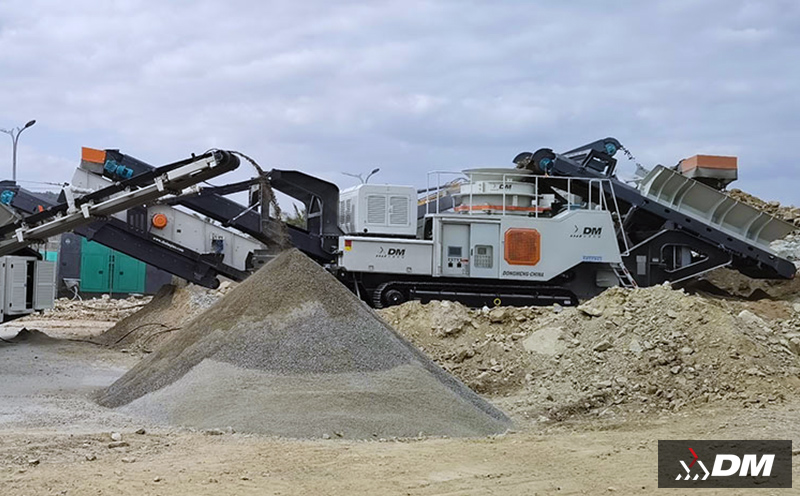
Remote road, railway, and infrastructure projects often face a difficult aggregate supply problem. The jobsite may be far from commercial quarries. Transporting finished stone over long distances can be expensive, slow, and vulnerable to fuel prices, road restrictions, and truck availability. At the same time, the project still needs consistent aggregate for base layers, asphalt, concrete, drainage, and structural fill. When supply is unreliable, construction schedules suffer.
A tracked mobile cone crusher can change the economics of these projects by moving the crushing process closer to the material source or directly along the construction corridor. Instead of hauling large volumes of raw rock to a distant fixed plant, contractors can process suitable material near the jobsite and produce graded aggregate where it is needed. This approach is especially valuable for mountainous roads, desert highways, mining access roads, railway extensions, hydropower projects, and temporary infrastructure works.
Aggregate is heavy, and transport often becomes one of the largest cost items in remote construction. Even when the raw material is available locally, it may not meet the required size or shape. Oversized rock from borrow pits, tunnel excavation, or hillside cuts must be processed before it can be used. If the project relies only on external supply, every ton carries the cost of quarry loading, long-haul trucking, waiting time, unloading, and sometimes double handling at temporary stockyards.
A tracked mobile cone crusher helps solve this by reducing the distance between material extraction and final use. It can work near a blasted rock source, follow a road construction front, or operate beside a temporary screening plant. The result is not just lower haulage cost. It also gives the project team more control over production timing, stockpile planning, and specification compliance.
Cone crushing is commonly used when the project requires a well-shaped, consistent aggregate product from medium-hard to hard rock. A tracked mobile cone crusher is suitable for processing materials such as granite, basalt, river stone, limestone, and hard construction rock after primary crushing. It is often used as a secondary or tertiary crusher, producing sizes for road base, concrete aggregate, asphalt aggregate, and general infrastructure use.
The cone crusher’s strength is controlled compression crushing. Compared with simply reducing rock to smaller pieces, it can help improve product shape and size consistency when operated with the correct chamber, feed level, and closed-side setting. For road and railway projects, this matters because aggregate shape affects compaction, interlock, asphalt performance, and concrete quality. A mobile cone unit allows contractors to pursue these specifications without committing to a permanent plant at every project location.
A tracked mobile cone crusher is particularly useful when the project moves faster than a fixed plant can justify. In road construction, the equipment can be relocated as the working face advances. In railway and tunnel projects, it can process excavated rock that would otherwise be treated as waste. In mining infrastructure, it can produce access road material near the pit or camp. In remote civil engineering projects, it can support temporary aggregate demand without waiting for a permanent crushing station.
Mobility also reduces permitting and civil work requirements. A fixed crushing plant may need foundations, permanent conveyors, electrical infrastructure, and a longer approval process. A tracked unit can be delivered, commissioned, and relocated with far less site preparation. For contractors working under tight schedules, this shorter setup time can be as valuable as the crushing capacity itself.
A tracked mobile cone crusher rarely works alone. For best results, it should be part of a practical mobile circuit. A jaw crusher or impact crusher may handle the primary stage. The cone crusher then reduces the material further, while a mobile screening machine separates finished sizes and returns oversize to the cone if a closed circuit is required. Conveyors, stockpilers, magnets, dust suppression, and water supply should also be considered.
The project team should define the required end products first. For example, a road project may need 0-5 mm fines, 5-10 mm aggregate, 10-20 mm aggregate, and larger base material. An asphalt application may require tighter shape and grading control. A drainage layer may prioritize clean, uniform stone. Once the product targets are clear, the cone chamber, screen media, recirculation setup, and stockpile layout can be chosen to support those targets.
Choosing a tracked mobile cone crusher should begin with feed size and feed quality. Cone crushers need controlled feed conditions. They are not designed to receive uncontrolled oversize directly from blasting. A primary crusher should reduce the rock to a suitable size before it enters the cone. The feed should also be distributed evenly to maintain stable chamber operation. Poor feed control can cause uneven wear, poor product shape, and reduced capacity.
The crushing chamber should match the target product. Coarse chambers are better for larger reduction stages, while medium or fine chambers support smaller finished sizes. Closed-side setting should be adjusted according to the required grading, but setting the crusher too tight can reduce capacity and increase wear. The best result comes from balancing throughput, shape, wear life, and product specification instead of chasing the smallest possible setting.
Remote projects require a different maintenance mindset. Spare parts, service teams, lifting equipment, and fuel supply may not be readily available. A tracked mobile cone crusher should be selected with service access, liner change procedures, hydraulic adjustment, diagnostics, and parts availability in mind. If the nearest support base is far away, the contractor should plan wear parts, filters, belts, lubricants, and critical sensors before production starts.
Operators should monitor feed level, crusher power draw, lubrication temperature, hydraulic pressure, and product gradation. Changes in any of these can indicate feed variation, liner wear, or screen issues. Regular inspection of liners, belts, rollers, tracks, guards, and dust suppression systems helps prevent small problems from becoming project delays. In remote work, one preventable breakdown can cost more than several days of planned maintenance.
The first visible benefit of a tracked mobile cone crusher is reduced transport. Processing rock near the work zone means fewer trucks hauling finished aggregate from distant suppliers. This can lower fuel use, reduce traffic exposure, and free trucks for other project duties. The second benefit is schedule control. If a project has its own mobile crushing capacity, it is less dependent on external quarry availability and delivery windows.
The third benefit is specification control. By adjusting the cone setting, screen configuration, and recirculation rate, the project team can adapt production to changing demand. One week may require more base material, while another may require smaller aggregate for concrete or asphalt. A mobile crushing circuit provides flexibility that is difficult to achieve when all aggregate is purchased from outside sources.
The return on a tracked mobile cone crusher depends on project volume, haul distance, rock suitability, fuel cost, labor cost, and aggregate price. The longer the transport distance from external quarries, the more attractive on-site processing becomes. If the project already generates usable rock from excavation, the value increases further because waste can become a construction resource.
ROI should include both direct and indirect savings. Direct savings include reduced purchased aggregate, lower haulage, less double handling, and better use of excavated material. Indirect savings include fewer schedule delays, improved control over quality, reduced stockout risk, and more competitive bidding for future remote projects. Contractors who frequently work in road, railway, mining, or hydropower regions may use the same mobile cone unit across multiple jobs, spreading the investment over several revenue streams.
A tracked mobile cone crusher is a practical solution for remote infrastructure projects where aggregate supply, transport cost, and schedule control are major concerns. It allows contractors to process local rock closer to the point of use, produce graded materials for road and railway work, and adjust output as project demand changes. The best results come from treating the machine as part of a complete mobile circuit, with proper primary crushing, screening, maintenance planning, and stockpile management. For customers facing long haul distances and variable jobsite conditions, mobile cone crushing can turn local material into reliable project value.
Related Articles
The "Hexagonal Warrior" in Mobile Crushing — Dongmeng Heavy Industry Crawler Mobile Jaw Crushing Station
2026-09-11 More+Crawler mobile jaw crushing station is widely used in mine exploitation, tunnel ...
Demolition Project Construction Waste Disposal Solution - Complete Crushing and Screening Equipment Layout Plan
2026-06-11 More+With the continuous progress of urban renewal, old building demolition and facto...
4 Cons of Mobile Jaw Crusher To Consider & How Reliable Manufacturers Solve These Pain Points
2026-07-01 More+In global aggregate quarries, open-pit mines and construction waste recycling pr...
Ten Common Failures of Sand Making Machine and Corresponding Solutions
2026-07-02 More+In the modern manufactured sand production industry, sand making machine serves ...
Mobile Screening on Site: Tracked Screening Machine for Every Job
2026-07-17 More+Need to sort aggregates, recycle C&D waste, or scalp material across multipl...
Remote Quarry Output with Mobile Cone Crusher
2026-06-23 More+Remote hard rock quarries often struggle with inconsistent secondary crushing, h...
Custom‑Built Solutions! Shanghai Dongmeng Fixed & Mobile Limestone Crushing‑Screening Solutions
2026-09-18 More+limestone crushing‑screening solution is the key for mineral and sand‑aggregate ...
Tracked Mobile Cone Crusher: Hard Rock Solutions
2026-08-25 More+Facing challenges like remote mining sites or urban demolition? Discover how a t...
How to Select a Manufacturer of Construction Waste Treatment Equipment? Shanghai Dongmeng Mobile Crushing Station Realizes Waste Recycling
2026-08-26 More+With the continuous advancement of urban renewal, old‑city demolition and road r...
Mobile Secondary Crushing: Tracked Cone Crusher for Remote Sites
2026-07-24 More+Need high-quality crushed aggregate at remote mines and construction sites? Lear...