
How to Maintain a Vibrating Screen?
2026-09-27

For sand‑aggregate and construction waste crushing sites, poor commissioning of vibrating feeder (ZSW double‑eccentric‑shaft vibrating feeder) frequently causes material blockage, unstable feed rate and abnormal body shaking. Below are practical on‑site adjustment points for industry reference. When selecting equipment, cooperating with a reliable vibrating feeder source factory ensures high‑precision manufacturing and reduces potential debugging‑related failures.
1. Eccentric Counterweight Adjustment for Vibrator (Adjust Exciting Force & Amplitude, Most‑Used)
Working principle: Two groups of eccentric shafts rotate synchronously. Higher overlap of eccentric blocks brings larger exciting force, amplitude and feeding capacity.
Power off and lock the machine, remove protective covers at both ends of the vibrator.
Loosen clamping bolts and rotate two‑side eccentric blocks synchronously.
✅Eccentric blocks on both sides must keep identical angles; inconsistent angles result in torsional vibration, abnormal noise and short bearing service life.
✅More overlap of eccentric blocks increases exciting force; larger stagger angle decreases exciting force.
Tighten bolts and reinstall protective covers after adjustment.
Carry out no‑load test and measure amplitude: 1.5‑2.5 mm is the normal range. Upper limit applies for large hard materials. Do not pursue excessive amplitude for wet sticky materials to avoid blockage.
⚠️Note: Adjust in small increments instead of one‑time large modification. Adjusting only one‑side eccentric block is strictly forbidden.
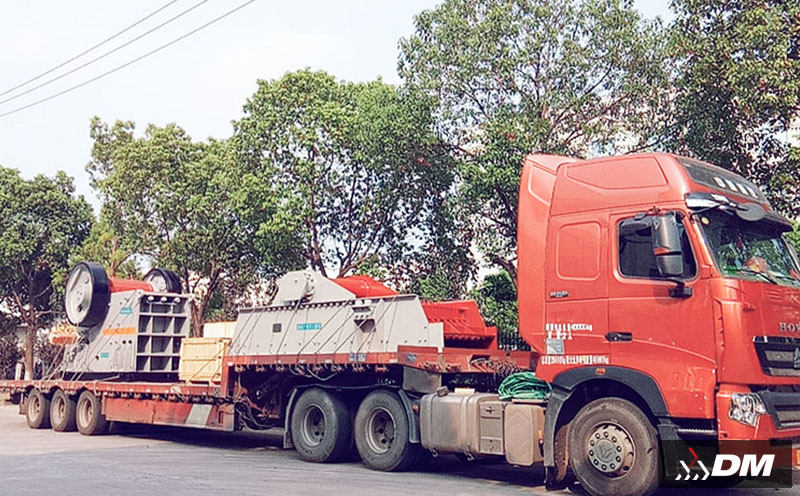
2. Hopper Gate Adjustment (Control Material Bed Thickness, Quick Flow Regulation)
Open the gate → thicker material bed and higher feed rate; close the gate → thinner material bed and lower throughput.
✅Advantage: Fast on‑site fine‑tuning without modifying the vibrator.
⚠️Disadvantage: Excessively open gate may cause material compaction, hard startup and high current value.
Suitable for coarse adjustment. Stable operation requires combined tuning of eccentric blocks and frequency converter.
3. Grizzly Bar Gap Adjustment (Pre‑screening, Unique for ZSW Model)
Front grizzly bars pre‑screen fine materials and relieve feeding load of the crusher. Adjust gap width by adding or removing gaskets.
Larger gap: Higher feeding capacity, less fine material entering crusher. Smaller gap: Reduced pre‑screening effect.
⚠️Key point: Clean blocked grizzly bars first when insufficient feeding occurs.
4. Frequency Conversion Adjustment (Optional, Stepless Feeding Control)
Install frequency converter to adjust vibration frequency and feeding speed without disassembling eccentric blocks.
Higher frequency: Faster feeding. Lower frequency: Slower feeding.
⚠️Avoid resonance zone. Recommended operating frequency: 35‑50Hz.
5. Support Spring Inspection & Adjustment (Vibration Balance, Not for Flow Control)
Four groups of support springs realize vibration isolation. Press four corners of the trough after shutdown, uniform rebound is required.
Aging, fracture or inconsistent stiffness of springs will trigger offset vibration and unstable feeding. Replace four springs as a complete set instead of single‑piece replacement.
6. Trough Installation Angle (Factory‑Set, On‑Site modification is not recommended)
The trough is horizontal (0°) upon delivery. Max fine‑tuning angle ≤3°. Larger angle accelerates material flow yet causes material splashing.
Recommended On‑Site Debugging Sequence
1. Clean grizzly bars, inspect springs for damage & looseness
2. Set proper hopper gate opening to prevent material compaction
3. No‑load operation: Fine‑tune eccentric blocks to target amplitude, check noise & torsional vibration
4. Loaded operation: Fine‑tune slightly for continuous feeding without material accumulation or splashing
5. Record parameters of optimal working condition.
Troubleshooting Guide
Slow material movement & material accumulation: Increase exciting force or open gate; clean grizzly bars for wet‑sticky feed.
Fluctuating feed rate: Check spring consistency, synchronous eccentric‑block angle and hopper bridging issue.
High current, loud noise & frame shaking: Reduce exciting‑force overlap, inspect foundation bolts and springs.
Related Articles
How to Select a Manufacturer of Construction Waste Treatment Equipment? Shanghai Dongmeng Mobile Crushing Station Realizes Waste Recycling
2026-08-26 More+With the continuous advancement of urban renewal, old‑city demolition and road r...
Jaw crusher host suddenly shut down? Don't be afraid! First check to see if it is due to these reasons!
2026-07-15 More+In global mining, aggregate processing and construction waste recycling industri...
How to Choose Crusher Manufacturers: 2026 Purchasing Guide and Strength Screening Tips
2026-09-04 More+1. Introduction: Selecting the Right Crusher Manufacturers Is Critical for Long‑...
4 Cons of Mobile Jaw Crusher To Consider & How Reliable Manufacturers Solve These Pain Points
2026-07-01 More+In global aggregate quarries, open-pit mines and construction waste recycling pr...
How to Maintain a Vibrating Screen?
2026-09-27 More+The vibrating screen is the core screening equipment in sand, aggregate and mini...
How to Resolve Plugging Materials of Jaw Crusher?
2026-08-27 More+During rock‑crushing operations in quarries, mineral‑processing plants and const...
How Moisture Content Affects Construction Waste Plant Performance
2026-06-12 More+Moisture Content Is Often the Hidden Factor Behind Poor Plant PerformanceWhen ev...
How to Improve Profitability in a Construction Waste Recycling Plant
2026-06-05 More+Why Some Construction Waste Recycling Plants Struggle to Make ProfitsMany invest...