
How to Maintain a Vibrating Screen?
2026-09-27

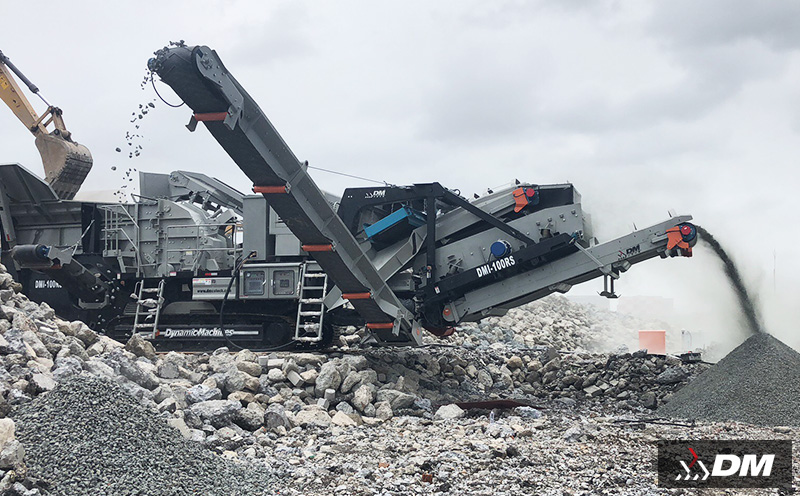
When evaluating a construction waste recycling plant, many investors focus on:
However, one critical factor is frequently underestimated:
In many regions of China, especially during the rainy season, construction and demolition waste often contains significant amounts of moisture.
This can have a major impact on:
Understanding how moisture affects recycling performance is essential for achieving stable production.
Construction waste originates from many different sources.
Common materials include:
Usually contains moderate moisture.
Often absorbs water easily.
Generally less affected by moisture but may be mixed with wet soil.
Can contain large amounts of clay and fine particles.
As a result, moisture content may fluctuate significantly from project to project.
When moisture levels increase, recycling plants often experience several operational challenges.
Wet fines can clog screening surfaces.
This reduces screening efficiency and lowers throughput.
Moist materials tend to stick inside:
This can interrupt material flow.
Plants designed for 400 TPH may experience actual output reductions of 15–25% under severe wet conditions.
Equipment must work harder to process sticky materials.
This increases electricity consumption and operating costs.
Many urban renewal projects generate granite demolition waste from:
Granite itself is not highly sensitive to moisture.
However, problems arise when granite fragments become mixed with:
Under these conditions:
This is particularly common in southern China during extended rainy periods.
Modern construction waste recycling plants increasingly incorporate specialized equipment to address moisture-related challenges.
Removes:
before primary crushing.
Improve material flow under sticky conditions.
Allow more efficient separation of wet materials.
Optimizes moisture levels throughout the process.
A recycling facility in Southern China processed materials from several urban redevelopment projects.
850 mm
12–18%
320–420 TPH
10–12 hours
Through optimized material handling and screening design, the plant maintained stable production despite challenging weather conditions.
| Parameter | Dry Material | High-Moisture Material |
|---|---|---|
| Screening Efficiency | Higher | Lower |
| Energy Consumption | Lower | Higher |
| Wear Rate | Moderate | Moderate |
| Production Stability | Stable | More Variable |
| Maintenance Frequency | Lower | Higher |
This comparison demonstrates why moisture management is an important component of plant design.
As China's waste-free city initiative expands and resource utilization targets become more ambitious, recycling plants are increasingly adopting digital technologies to improve operational control. Around 200 cities are expected to participate in waste-free city construction during the current planning period.
Modern construction waste recycling facilities increasingly utilize:
Tracking production performance continuously.
Reducing unplanned downtime.
Improving plant efficiency.
Supporting regulatory compliance.
Construction waste recycling is no longer simply about crushing and screening materials.
Long-term profitability depends on understanding the relationship between:
For operators handling granite, concrete, brick waste, and mixed demolition materials, moisture management can significantly influence production stability and overall cost per ton.
Shanghai Dongmeng remains committed to developing advanced construction waste recycling solutions that help customers maximize throughput, improve recycled aggregate quality, and achieve sustainable growth in an increasingly competitive market.
Related Articles
How to Improve Profitability in a Construction Waste Recycling Plant
2026-06-05 More+Why Some Construction Waste Recycling Plants Struggle to Make ProfitsMany invest...
4 Cons of Mobile Jaw Crusher To Consider & How Reliable Manufacturers Solve These Pain Points
2026-07-01 More+In global aggregate quarries, open-pit mines and construction waste recycling pr...
Jaw crusher host suddenly shut down? Don't be afraid! First check to see if it is due to these reasons!
2026-07-15 More+In global mining, aggregate processing and construction waste recycling industri...
How to Choose Crusher Manufacturers: 2026 Purchasing Guide and Strength Screening Tips
2026-09-04 More+1. Introduction: Selecting the Right Crusher Manufacturers Is Critical for Long‑...
How to Select a Manufacturer of Construction Waste Treatment Equipment? Shanghai Dongmeng Mobile Crushing Station Realizes Waste Recycling
2026-08-26 More+With the continuous advancement of urban renewal, old‑city demolition and road r...
How to Resolve Plugging Materials of Jaw Crusher?
2026-08-27 More+During rock‑crushing operations in quarries, mineral‑processing plants and const...
How to Adjust Heavy‑Duty Vibrating Feeder? Practical On‑Site Debugging Tips
2026-09-19 More+For sand‑aggregate and construction waste crushing sites, poor commissioning of ...
How to Maintain a Vibrating Screen?
2026-09-27 More+The vibrating screen is the core screening equipment in sand, aggregate and mini...