
How to Maintain a Vibrating Screen?
2026-09-27

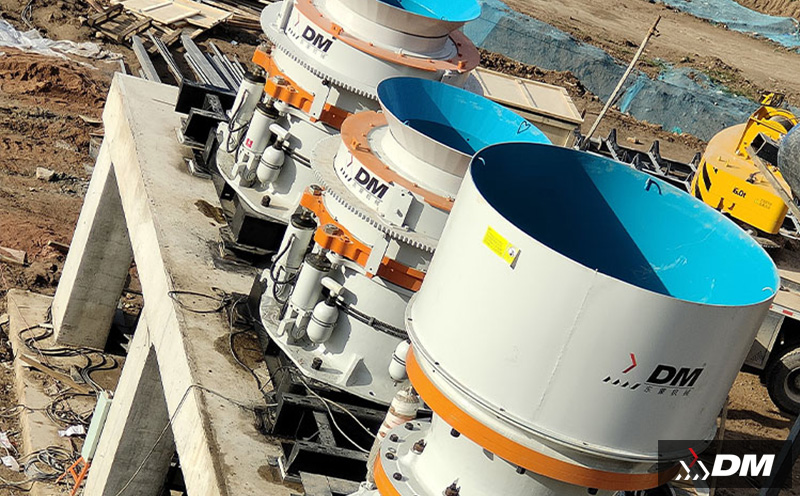
For many quarry and aggregate producers, the biggest profit gap is not always caused by a lack of raw material. It is often hidden in the middle and fine crushing stages, where inconsistent feed, poor chamber selection, excessive recirculation, and unstable product shape gradually erode margin. A plant may have enough blasted rock, enough loaders, and enough demand from concrete and asphalt customers, yet still struggle with high wear costs, fluctuating gradation, and too much out-of-spec material.
This is where a well-designed fixed cone crusher solution becomes more than a machine choice. It becomes a production strategy. When the primary crusher has already reduced hard rock to a manageable size, the cone crushing stage determines whether the plant can produce high-value aggregates with stable size distribution and acceptable shape. For overseas customers in quarrying, mining, road construction, and commercial aggregates, the right fixed cone system can improve yield, reduce waste, and make the entire operation more predictable.
In a typical hard rock plant, primary crushing only opens the process. The real commercial value is created when the material is shaped, reduced, screened, and classified into sellable sizes. If the secondary or tertiary crushing stage is not properly designed, the plant may produce too much oversize, too much fine material, or particles that fail customer specifications.
A fixed cone crusher is widely used because it combines compression crushing, high reduction capability, and consistent output. It is especially suitable for granite, basalt, river stone, gabbro, iron ore, and other abrasive or high-strength materials. Unlike an impact crusher, which is often selected for softer materials or shape correction, a cone crusher is built for durability under demanding hard rock conditions.
However, the machine alone does not solve the problem. Chamber type, closed side setting, feed grading, liner profile, screening efficiency, and recirculation design all influence final performance. A profitable cone crushing solution must be engineered around the customer’s material and market requirements.
Many quarry operators face similar symptoms. The plant reaches the expected capacity only during short periods, but average daily production is lower than planned. Screens become overloaded because too much material returns to the crusher. Wear liners are replaced earlier than expected. The finished aggregate does not meet shape requirements for asphalt or concrete. Operators keep adjusting the crusher setting, but the improvement does not last.
These issues are usually connected. If the feed entering the fixed cone crusher is not well graded or contains too much fine material, the crushing chamber cannot work efficiently. If the crusher is operated with irregular feed or frequent empty running, liner wear becomes uneven and product shape deteriorates. If the screening stage is undersized, properly crushed material may be sent back unnecessarily, increasing energy consumption and reducing net output.
The solution is not simply to install a larger crusher. The better approach is to balance feed control, crushing chamber selection, screening capacity, and automation. When the system is balanced, the cone crusher works in a stable crushing condition, and the plant can deliver consistent aggregate sizes with lower operating stress.
A strong fixed cone crushing solution usually begins with the target products. For example, a quarry may need 0-5 mm manufactured sand, 5-10 mm chips, 10-20 mm concrete aggregate, and 20-30 mm road base aggregate. Another operation may focus on railway ballast, asphalt aggregate, or high-strength concrete stone. Each product mix requires a different process layout.
After the product targets are clear, the feed size from the primary jaw crusher must be matched to the cone chamber. The fixed cone crusher should receive stable, controlled feed rather than occasional surges. A surge bin or regulated feeder can help maintain continuous loading. This allows the crushing chamber to remain full and improves particle-on-particle compression.
Screening is equally important. A properly sized screening machine separates finished products and sends only oversize back to the crusher. This reduces unnecessary recirculation and protects capacity. In some plants, using a secondary cone followed by a tertiary cone creates better control than forcing one crusher to do too much reduction. In others, a cone crusher followed by a vertical shaft impactor or shaping stage may be used when premium particle shape is required.
In commercial quarrying, a fixed cone crusher is commonly used to produce concrete and asphalt aggregates. Customers in these markets care about gradation stability, particle shape, cleanliness, and delivery reliability. A plant that can consistently meet specifications often gains stronger relationships with batching plants, asphalt producers, and infrastructure contractors.
In mining operations, cone crushers are used for ore size reduction before grinding, heap leaching, or further mineral processing. The focus may be throughput, liberation size, and wear life rather than aggregate shape. Even in this case, stable operation is essential because downstream mills or processing circuits depend on predictable feed.
For road construction and infrastructure projects, fixed cone crushing can support large-volume production of base material, sub-base material, and graded stone. When projects require continuous supply over months or years, fixed crushing plants offer strong advantages in capacity, energy efficiency, and operating discipline.
The most obvious benefit of a fixed cone crusher is higher production of marketable aggregate. But the more important benefits are often operational. Stable cone crushing reduces the load variation on screens and conveyors. It lowers the frequency of blockages and emergency adjustments. It improves liner utilization because the chamber operates under more consistent conditions.
Better product control also reduces stockpile waste. If a plant produces too much material in a low-value size range, the operator may have to discount it, blend it, or store it for long periods. By adjusting the crushing circuit to produce the sizes that the market actually demands, the quarry can turn more of its feed material into revenue.
Energy efficiency is another benefit. Excessive recirculation means the same rock is crushed and conveyed multiple times. A balanced cone and screening circuit reduces this waste. Over a full year, even small reductions in energy per ton and wear cost per ton can create meaningful savings.
Before selecting a fixed cone crusher, customers should evaluate material hardness, abrasiveness, feed size, moisture, clay content, target capacity, and final product specifications. It is also necessary to consider whether the crusher will work as a secondary crusher, tertiary crusher, or part of a closed circuit.
The chamber should match both feed and output requirements. A coarse chamber may provide high capacity for secondary crushing, while a fine chamber may be required for tighter final sizes. The drive power, frame strength, hydraulic adjustment, tramp iron protection, and automation system should also be reviewed.
Customers should avoid selecting equipment based only on maximum catalog capacity. Real output depends on feed grading, crusher setting, screen efficiency, return load, and operating hours. A lower-risk decision is to design the full process flow first, then select the crusher model that fits the system.
A fixed cone plant can run reliably for many years, but only if operation and maintenance are disciplined. Operators should maintain choke feeding whenever possible, monitor power draw, check lubrication quality, and keep the feed centered. Uneven feed is one of the most common causes of poor liner wear and unstable product size.
Regular inspection of liners, bearings, hydraulic systems, and oil temperature helps prevent major failures. Wear parts should be replaced before they damage production quality or mechanical components. The plant should also provide safe access platforms, lifting points, and enough space for liner changes.
Automation can improve consistency by monitoring load, setting, lubrication, and alarms. It does not replace trained operators, but it helps them make timely decisions. For overseas sites where labor skills and shift practices vary, automation can reduce the gap between planned and actual performance.
The return on a fixed cone crusher investment comes from several areas. First, it increases the percentage of material that becomes high-value product. Second, it reduces recirculation and unnecessary handling. Third, it lowers wear and energy cost per ton when the circuit is balanced. Fourth, it improves customer confidence because the plant can supply consistent aggregate.
For a quarry producing hundreds of thousands or millions of tons per year, a small improvement in yield or cost per ton can pay back quickly. The crusher should therefore be evaluated over its working life, not only by the purchase price. A cheaper machine that causes downtime, poor shape, and high wear can become expensive very quickly.
A fixed cone crusher is not just a hard rock reduction machine. It is a key profit center in quarry and aggregate production. When integrated with proper feed control, chamber selection, screening, automation, and maintenance planning, it can help overseas customers produce better aggregate, reduce waste, and improve long-term return on investment. For operations that need stable output and strong product quality, a fixed cone crushing solution is one of the most practical ways to turn rock into reliable revenue.
Related Articles
Stationary Screening Plants: Boost Quarry Output & Quality
2026-08-07 More+Is your screening stage holding back production and product quality? Discover ho...
Fix Quarry Bottlenecks with a Jaw Crusher
2026-06-30 More+A practical guide for quarry and aggregate producers on using a fixed jaw crushe...
What Market Advantages Boost Construction Waste Treatment & Resource Recycling?
2026-06-03 More+Urban reconstruction generates massive construction waste, and construction wast...
5 Things You Need to Know About Concrete Crushers
2026-07-30 More+In the global industrial chain of construction waste recycling, infrastructure r...
Solve Primary Crushing Bottlenecks with a Fixed Jaw Crusher
2026-07-14 More+Is oversized, hard rock choking your mine's throughput and driving up costs...