
How to Maintain a Vibrating Screen?
2026-09-27

In the modern manufactured sand production industry, sand making machine serves as the core equipment that crushes coarse materials into high-quality manufactured sand, and its stable operation directly determines the output and efficiency of the entire production line. However, running under heavy load and heavy dust conditions for a long time, sand making machines will inevitably break down. Timely and accurate fault diagnosis and troubleshooting are not only core skills for equipment managers, but also the key to ensuring continuous production and cost reduction for sand and gravel enterprises. Based on practical application scenarios of global users, this article systematically sorts out the ten most frequent failures of sand making machines and their solutions.
Crushers: The Cornerstone from Coarse Crushing to Sand Making
To master troubleshooting of sand making machines, you first need to clarify its position in the crushing process. The crusher family covers all stages from primary coarse crushing to final shaping. In a complete sand and gravel production line, materials are first subjected to primary crushing by jaw crushers, then medium and fine crushing by cone crushers or impact crushers, and finally vertical shaft impact crushers, namely sand making machines, complete stone shaping and sand production. Sand making machines adopt high-speed impact principles of "rock-on-rock" or "rock-on-iron" to process crushed stones into construction sand with reasonable gradation and excellent particle shape. Therefore, the operation status of front crushing equipment, such as oversize feeding particle size, will directly affect the load and failure rate of sand making machines. Globally, sand making machines play an irreplaceable role in infrastructure construction across Europe and America, as well as mine development in Southeast Asia and Africa, and their maintenance experience is highly universal.
Global Crusher Manufacturers and Dongmeng Shanghai Equipment
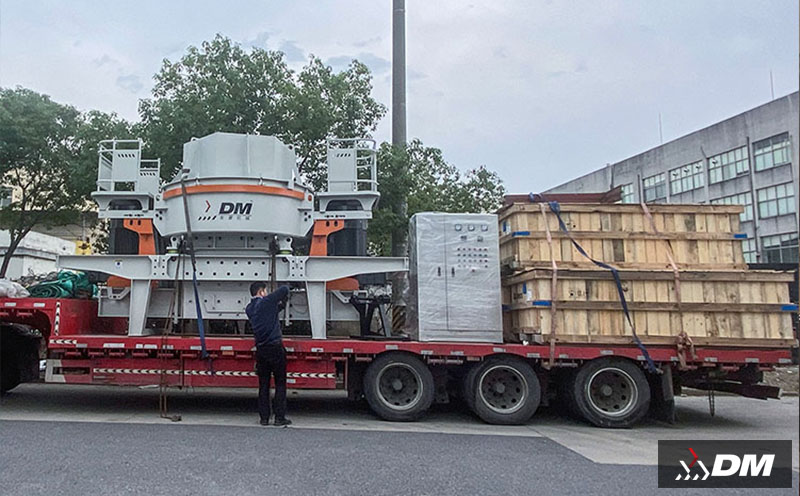
Faced with global users' demand for efficient and stable crushing equipment, crusher manufacturers keep carrying out technological innovation. They continuously promote industrial progress by introducing advanced international design concepts, combining localized production and global service networks. In China, manufacturers represented by Shanghai Dongmeng Road & Bridge Machinery Co., Ltd. actively absorb international advanced technologies and carry out optimized iteration according to complex domestic working conditions. The DVSI series high-efficiency vertical shaft impact crushers manufactured by Shanghai Dongmeng integrate the advantages of "rock-on-rock" and "rock-on-iron". Equipped with high-precision international brand bearings and original imported thin oil lubrication stations, the equipment reduces failure rate and improves operational reliability from the source of design. For users using Shanghai Dongmeng equipment and other brands of sand making machines, mastering common fault solutions is a required course to maximize equipment value and guarantee project progress.
Ten Common Failures of Sand Making Machine and Corresponding Countermeasures
Based on industrial typical cases and professional analysis, here are the ten most representative failures of sand making machines and their handling strategies:
1. Unstable operation and excessive fuselage swing
This is one of the most frequent failures, usually caused by severely worn vulnerable parts on the impeller, oversize feeding particle size or blocked impeller flow channels. The solutions are to replace vulnerable parts in time to restore impeller balance, strictly control feeding particle size and clear blockages in flow channels.
2. Abnormal temperature rise of bearings
Excessive bearing temperature is a dangerous warning signal, mainly resulting from dust and foreign matters entering bearings, bearing abrasion or insufficient lubricating oil. Operators shall regularly clean foreign matters, fill proper amount of lubricating grease on schedule, and replace damaged bearings immediately if they are worn out.
3. Abnormal noise or metal impact sound inside the machine
It usually indicates loose or fallen internal parts such as connecting bolts, liners or impellers. The machine must be shut down for inspection at once; fasten loose components or replace damaged parts to avoid more serious equipment damage.
4. Enlarged discharge particle size and reduced finished product quality
Possible causes include loose transmission V-belts leading to insufficient rotating speed, oversize feeding particle size or improperly adjusted impeller speed. Adjust belt tightness, feed materials in accordance with specifications and properly adjust impeller speed to achieve ideal crushing effect.
5. Inflexible bearing operation or excessive idle rotation resistance
It is usually caused by materials entering the bearing sealing cover and resulting in jamming. Open the sealing cover to thoroughly clean internal foreign matters and check the integrity of relevant sealing parts.
6. Damaged upper and lower shaft sealing rings or oil leakage
Sealing ring damage is mostly triggered by heat generated from shaft sleeve displacement and friction against the pressure cover; oil leakage is caused by gaps formed by worn sealing rings. Replace new sealing rings and worn shaft sleeves, and inspect the lubrication system.
7. Excessive fuselage vibration value
Besides unbalanced impellers, uneven wear of rotor throwing heads, damaged shock absorption pads or loose anchor bolts are common inducements. Replace throwing heads and shock absorption pads targeted, and fully fasten all connecting bolts.
8. Sudden loud rumbling noise of the machine
It may be a warning of severe bearing or gear problems, loose key bolts or vulnerable parts reaching the wear limit. Shut down the machine urgently for comprehensive inspection, and repair or replace damaged components in a timely manner.
9. Belt turnover or abnormal abrasion
Direct causes include poor belt quality, excessive wear or belt pulleys installed out of the same plane. Replace qualified V-belts and readjust the coaxiality of belt pulleys.
10. Abnormal ammeter readings
Excessive current is often caused by excessive feeding volume, accumulated materials in crushing chamber or blocked discharge hopper; insufficient current results from insufficient feeding or slipping belts. Adjust feeding speed timely according to current changes and inspect the transmission system.
In conclusion, efficient operation of sand making machine relies on scientific maintenance and timely troubleshooting. Starting from the overall technological process of crushers, selecting products with reliability-focused design, combined with thorough understanding and rapid response to the above ten common problems, global users can significantly extend the trouble-free operation time of equipment and escort the production of sand and gravel aggregates.
Related Articles
How to Select a Manufacturer of Construction Waste Treatment Equipment? Shanghai Dongmeng Mobile Crushing Station Realizes Waste Recycling
2026-08-26 More+With the continuous advancement of urban renewal, old‑city demolition and road r...
Tracked Mobile Screening Machine: Solutions to Quarry and Construction Waste Screening Pain Points
2026-07-31 More+Explore how tracked mobile screening machines solve low efficiency, poor flexibi...
Concrete Crushing Machine: A Detailed Introduction to Core Crushing Equipment for Global Aggregate and Solid Waste Treatment
2026-07-09 More+In global mining exploitation, aggregate processing, construction waste recyclin...
Shanghai Dongmeng · Professional Construction Waste Disposal Solutions
2026-08-13 More+With the accelerated pace of urban‑related construction across the globe, old‑to...
What Are the Functions of Construction‑Waste Crushers?
2026-08-05 More+With ongoing urban renewal, road renovation and building demolition projects, la...
Remote Quarry Output with Mobile Cone Crusher
2026-06-23 More+Remote hard rock quarries often struggle with inconsistent secondary crushing, h...
What procedures are required for a construction waste treatment plant?
2026-04-24 More+The establishment of a construction waste treatment plant (resource recycling &a...
How to Adjust Heavy‑Duty Vibrating Feeder? Practical On‑Site Debugging Tips
2026-09-19 More+For sand‑aggregate and construction waste crushing sites, poor commissioning of ...
Mobile Cone Crushing for Remote Road Jobs
2026-07-03 More+This article explains how a tracked mobile cone crusher can help contractors and...
Portable Screening on Job Sites: Tracked Screening Machine Guide
2026-08-11 More+Need to produce sized aggregates at multiple job sites without hauling? Learn ho...