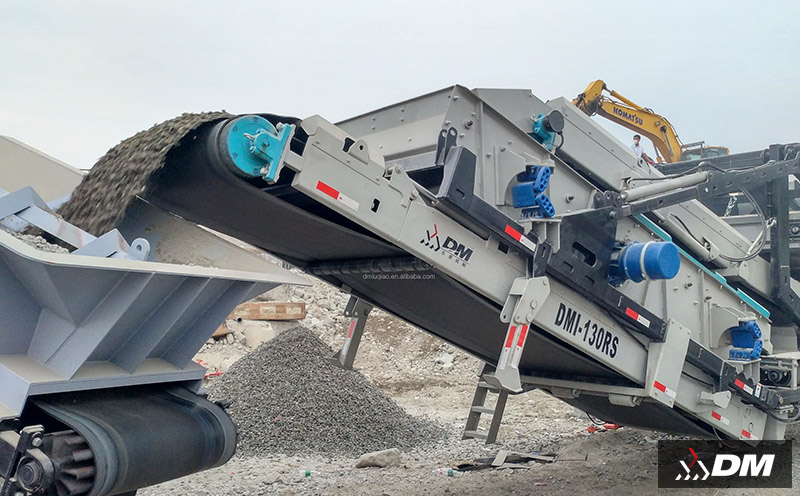
Across construction, quarrying, recycling, and infrastructure projects, material rarely comes from one fixed location. Projects move, sites change, and stockpiles shift—yet many producers still rely on stationary screening plants that are expensive to relocate and slow to set up. For contractors, recyclers, and aggregate operators who need clean, graded product at multiple locations, a tracked mobile screening machine is often the most productive and cost-effective way to classify material on site, with minimal setup and maximum flexibility.
The Pain Point: Fixed Screening Can't Follow the Work
A stationary screening machine works well when feed comes from a permanent plant, but it struggles when work is scattered. Hauling unscreened material to a central plant adds transport cost, truck traffic, and scheduling complexity. Setting up temporary screening is slow, labor-intensive, and disruptive. On urban job sites and remote projects, space and time are both limited. Operators need a screening solution that travels to the material, sets up fast, and produces saleable fractions immediately—without requiring a full construction crew and weeks of civil work.
The Solution: Self-Propelled Multi-Deck Mobile Screening
The Shanghai Dongmeng Group tracked mobile screening machine brings high-quality classification directly to wherever the material is. Mounted on a rugged crawler chassis, it drives itself around stockpiles, climbs rough terrain, and relocates between sites without disassembly or heavy transport.
- Tracked mobility on any terrain: The self-propelled undercarriage navigates muddy ground, slopes, and tight spaces with ease. Moving between jobs takes hours, not days, so productive time stays high.
- Multi-deck classification: Two-, three-, and four-deck configurations produce several sized fractions in a single pass—ideal for scalping, sizing, and final product grading all from one machine.
- Fast setup and tear-down: Hydraulic folding feeders and conveyors let operators go from transport mode to production in a very short time, maximizing productive hours on every job.
- Versatile screen media: A choice of woven wire, polyurethane, rubber, and punch plate handles wet, sticky, or abrasive feed while maintaining clean separation and long wear life.
When paired with a mobile jaw crusher or impact crusher, the unit completes a compact on-site crushing-and-screening train that produces finished, saleable aggregate right at the job.
Application Scenarios: Wherever Material Needs Grading
Mobile screening serves a remarkably wide range of work. In construction and demolition waste recycling, it separates crushed concrete, brick, and masonry into clean recycled fractions for road base, fill, and concrete applications, adding value to what would otherwise be waste. In quarrying and aggregates, it scalps fines ahead of crushers, performs final sizing of finished products, and handles temporary surge piles that don't justify a fixed plant. On road and highway projects, it screens excavated material and recycled pavement for immediate reuse in embankments, sub-base, and base layers, cutting hauling and virgin material costs. On hydropower and dam sites, it classifies excavated rock into specified aggregate sizes for concrete and embankment work. It also serves topsoil processing, landscaping aggregates, borrow-pit operations, and mine site development—any job that moves is a candidate for tracked mobile screening.
Customer Benefits: Flexibility Translates into Profit
The biggest advantage of a tracked mobile screening machine is utilization. A single unit can serve multiple sites and multiple customers throughout the year, spreading its capital cost over far more tonnes than a stationary unit tied to one location. On-site screening eliminates hauling of unscreened material, reducing truck costs, fuel consumption, and site traffic. Fast setup means shorter mobilization times and faster time to first saleable product. For contractors and rental-style operators, this flexibility directly improves revenue per machine and opens up smaller, shorter-duration jobs that would not justify a fixed plant. The result is a lower cost per tonne and a stronger competitive position.
Selection Logic: Match Decks and Size to the Job
Choosing the right tracked mobile screening machine depends on what you need to produce. Number of fractions determines deck count—two decks for simple separation, three or four decks for multiple finished products. Feed rate and maximum particle size determine screen area and machine size; always size for the peak tonnage you expect to handle, with margin for surge. Material characteristics matter too: wet, sticky feed favors aggressive stroke and self-cleaning media; highly abrasive rock calls for heavier-duty screen panels and reinforced decks. Where the unit will work alongside a mobile jaw crusher or cone crusher, the screen should be sized to match the crusher output so neither stage bottlenecks the other. Site conditions—space, slope, ground bearing, access—also influence the choice of machine size and configuration. Shanghai Dongmeng Group evaluates feed characteristics, product targets, and site conditions to recommend the right mobile screening solution for each operation.
Operation and Maintenance: Keep the Decks Clean and Running
Mobile screening performance depends on consistent upkeep. Operators should inspect screen media regularly for wear, blinding, and pegging, and clean or replace panels before efficiency drops significantly. Bearings, springs, and drive components need routine lubrication and condition checks, while conveyors and hydraulic systems should be monitored for proper tension, alignment, and leaks. The track undercarriage also requires attention—track tension, idlers, and drive components should be checked periodically, especially after relocations. The machine's compact, service-friendly design speeds daily checks and routine maintenance, and Shanghai Dongmeng Group supports customers with readily available wear parts, screen media options, and technical guidance to protect uptime on the move.
Return on Investment: More Sites, More Hours, More Revenue
For operators who work across locations, the return profile of a tracked mobile screening machine is strongly driven by utilization. Because one machine can replace the need for multiple temporary setups or costly hauling, it often pays back quickly through saved transport costs, faster project turnaround, and additional revenue from on-site processed material. Its mobility also expands the addressable market, enabling operators to take on smaller, shorter jobs that would not be economical with a fixed plant. Over the life of the machine, this flexibility compounds into strong, durable returns—making mobile screening one of the most versatile investments in crushing and screening.
Conclusion
Not every screening job happens at a permanent plant. For contractors, recyclers, and aggregate producers who move from site to site, a
tracked mobile screening machine delivers clean, in-spec fractions with fast setup, low mobilization cost, and far higher utilization than stationary alternatives. Shanghai Dongmeng Group helps customers deploy flexible mobile screening solutions that turn scattered material sources into consistent, saleable product—wherever the next job takes them. With rugged construction, efficient multi-deck screening, and proven reliability, these machines are more than equipment—they are a platform for growing a more flexible, more profitable business.


Related Articles
Centralized Construction Waste Disposal Solution: Complete Matching Equipment Scheme From Dongmeng
2026-08-20 More+Against the background of global urban renewal and strict environmental‑protecti...
Mine Tailings Solid Waste Disposal Technology - Shanghai Dongmeng Comprehensive Solid Waste Utilization Solution
2026-06-17 More+Nowadays, mining exploitation, urban infrastructure construction and urban renew...
Major Changes in the Sand & Aggregate Industry in 2026: Compliance First, Quality Wins — Dongmeng Helps Enterprises Seize New Opportunities
2026-07-23 More+In 2026, the sand and aggregate industry is undergoing three major transformatio...
Ten Common Failures of Sand Making Machine and Corresponding Solutions
2026-07-02 More+In the modern manufactured sand production industry, sand making machine serves ...
Demolition Project Construction Waste Disposal Solution - Complete Crushing and Screening Equipment Layout Plan
2026-06-11 More+With the continuous progress of urban renewal, old building demolition and facto...
Shanghai Dongmeng · Professional Construction Waste Disposal Solutions
2026-08-13 More+With the accelerated pace of urban‑related construction across the globe, old‑to...
Tracked Mobile Screening Machine: Solutions to Quarry and Construction Waste Screening Pain Points
2026-07-31 More+Explore how tracked mobile screening machines solve low efficiency, poor flexibi...
4 Cons of Mobile Jaw Crusher To Consider & How Reliable Manufacturers Solve These Pain Points
2026-07-01 More+In global aggregate quarries, open-pit mines and construction waste recycling pr...