
How to Maintain a Vibrating Screen?
2026-09-27

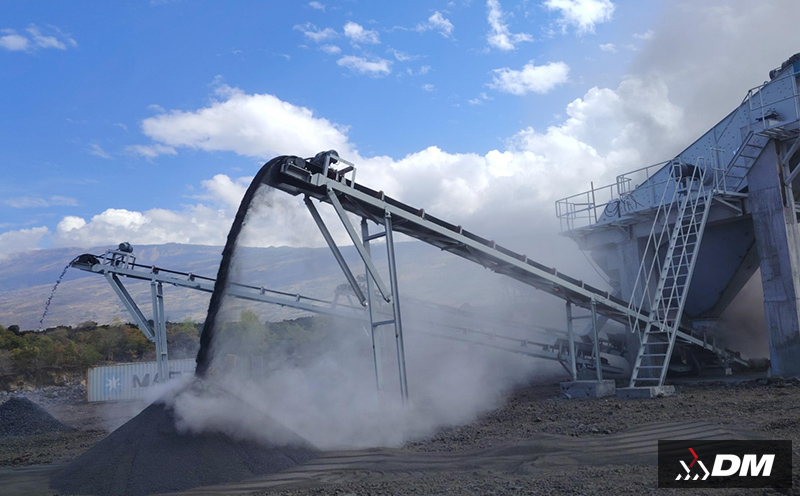
Primary crushing is where many quarry problems start, even when the symptoms appear later in the plant. A cone crusher may be starving, a screen may be overloaded, product stockpiles may swing from full to empty, and haul trucks may queue at the dump point. In many cases, the root cause is an unstable primary crushing stage. If blasted rock is not reduced consistently at the start, every downstream process becomes harder to control.
For quarry owners, mining contractors, and aggregate producers, a fixed jaw crusher is not just a machine placed after the dump hopper. It is the first serious control point in the production system. It determines how smoothly material flows into secondary crushing, how much oversize enters the circuit, how often operators have to stop and clear blockages, and how predictable the plant’s hourly output will be. When selected and installed correctly, a fixed jaw crusher can reduce operating stress across the whole quarry, not only at the primary station.
Quarries rarely feed perfect material. Blasted rock can include slabs, fines, clay pockets, weathered zones, and oversized boulders. Bench conditions change through the day, and loader operators may feed the hopper at uneven intervals. If the primary crusher does not handle those variations, the plant loses rhythm. The secondary crusher receives surges instead of a steady flow. Screens carry too much coarse material. Conveyors run empty for several minutes and then become overloaded. Maintenance crews are forced into reactive work instead of planned service.
A properly designed fixed jaw crusher installation addresses this by combining robust crushing geometry, controlled feed, adequate hopper volume, a suitable grizzly or feeder, and enough discharge capacity. The project should not be evaluated only by the nominal tons per hour of the crusher. The better question is whether the primary station can convert real quarry feed into a stable, manageable product size for the rest of the plant.
A fixed jaw crusher is especially suitable for long-term quarry operations, hard rock aggregate plants, cement raw material preparation, mining pre-crushing, and infrastructure supply projects where the source location is stable. Unlike mobile equipment, a fixed primary station can be built with strong foundations, large feed hoppers, heavy-duty structures, maintenance platforms, dust collection points, and permanent conveyors. This makes it a strong choice when the plant is expected to run for many years from the same quarry face or processing yard.
In granite, basalt, gabbro, limestone, and river stone applications, the jaw crusher’s role is to reduce large feed into a size that cone crushers, impact crushers, or screens can handle efficiently. In a hard rock quarry, the fixed jaw crusher protects the more sensitive downstream equipment by doing the heavy breaking work. In limestone operations, it provides high-capacity reduction with relatively simple maintenance. In mining pre-crushing, it can help stabilize feed before grinding, heap leaching, or further mineral processing.
Many primary crushing problems are caused by layout decisions, not by the crusher alone. If the dump hopper is too small, truck cycles interrupt the flow. If the feeder is undersized, large rocks can bridge and cause stoppages. If the grizzly opening is poorly chosen, too many fines enter the crusher or too much oversize bypasses the system. If the discharge conveyor is too narrow or too slow, the crusher cannot operate at its real capacity.
A strong fixed jaw crusher project starts with the material and the operating model. The engineering team should review feed size distribution, rock compressive strength, abrasiveness, moisture, clay content, target output size, desired plant capacity, and maintenance access. The crusher opening, jaw plate profile, eccentric speed, closed-side setting, feeder type, and foundation design should all support the same production target. When these decisions are aligned, the primary station becomes a stable production asset rather than a daily source of interruptions.
The first benefit customers usually expect from a fixed jaw crusher is higher throughput. That is important, but it is not the only value. A consistent primary product reduces recirculation in later crushing stages. It helps cone crushers operate in a more stable chamber condition. It improves screen efficiency because the feed is closer to the designed size range. It also reduces emergency shutdowns, which are often more expensive than normal maintenance because they interrupt trucks, loaders, operators, and downstream sales commitments.
Another major benefit is predictable cost per ton. Jaw crushers are mechanically straightforward, and wear parts such as jaw plates, cheek plates, and toggle components can be planned into maintenance schedules. When the feed is controlled and the crusher is operated within its design range, wear becomes more predictable. That allows quarry managers to plan liner changes, maintain inventory, and avoid paying for urgent freight or unscheduled repair crews.
Selecting a fixed jaw crusher should begin with the maximum feed size and required capacity, but it should not stop there. A crusher that looks large enough on paper may still perform poorly if the feed contains many flat slabs, sticky fines, or very abrasive rock. The jaw chamber profile must suit the material. The closed-side setting must support the downstream circuit. The motor power and flywheel design must match the crushing load. The frame must be strong enough for long-term quarry duty.
Customers should also consider how the crusher will be maintained. Can jaw plates be changed safely with available lifting equipment? Is there enough space around the crusher for access? Are walkways and platforms designed for daily inspection? Can operators see feed conditions clearly? Is there a hydraulic adjustment system to reduce time spent changing settings? These practical details often determine whether the machine delivers its expected value year after year.
Even the best fixed jaw crusher will underperform if it is fed incorrectly. Operators should avoid dumping large, uneven loads that shock the chamber. A feeder should maintain a steady flow and remove undersize material when appropriate. The crusher should not be run continuously with an empty chamber, and it should not be overloaded until material packs above the jaw opening. A stable feed level supports better crushing action and reduces unnecessary wear.
Maintenance should focus on daily inspection, lubrication, bolt tightness, jaw plate wear, bearing temperature, discharge clearance, and abnormal vibration. If jaw plates wear unevenly, the product size can change and capacity can fall. If discharge material builds up under the crusher, it can create belt damage and downtime. If the feeder or grizzly is neglected, the crusher may receive material it was not intended to handle. A disciplined maintenance routine protects the whole plant, not just the primary machine.
The return on investment from a fixed jaw crusher is usually seen in three areas: higher available production time, lower downstream stress, and more consistent sales product. If the primary station reduces unplanned stoppages, the entire plant benefits. If the jaw crusher produces a stable feed for secondary and tertiary stages, the plant can maintain tighter product specifications. If maintenance becomes predictable, operating costs become easier to manage.
For a quarry supplying concrete, asphalt, road base, railway ballast, or civil construction projects, reliability has commercial value. Customers expect delivery schedules to be met. Contractors do not want aggregate quality to change halfway through a project. A stable primary crushing system helps the producer meet those expectations. It also gives management better control over daily production planning, fuel usage, loader cycles, and stockpile strategy.
A fixed jaw crusher should be viewed as a project solution for controlling the first and most demanding stage of aggregate production. It solves more than size reduction. It stabilizes material flow, protects downstream equipment, reduces emergency downtime, and supports predictable cost per ton. For quarries and mining operations with a long-term source and high production targets, investing in the right primary jaw crushing station can improve the performance of the entire plant. The key is to select and install it around real feed conditions, maintenance access, downstream requirements, and long-term operating goals.
Related Articles
Solutions to the Difficulties of Urban Construction‑Waste Governance
2026-08-12 More+With accelerated urbanisation, continuous old‑town demolition and municipal reno...
Maximize Quarry ROI: Fixed Jaw Crusher Guide
2026-08-14 More+Discover how to optimize your aggregate production line. This guide addresses co...
How to Improve Profitability in a Construction Waste Recycling Plant
2026-06-05 More+Why Some Construction Waste Recycling Plants Struggle to Make ProfitsMany invest...
Upgrade Aggregate Shape with Fixed Impact Crusher Plants
2026-07-28 More+Low flaky content and cubical aggregate command premium prices. Discover how the...
Fixed Cone Crusher: Mastering Hard Rock Crushing
2026-08-21 More+Struggling with high wear costs and poor aggregate shape in hard rock crushing? ...
Jaw crusher host suddenly shut down? Don't be afraid! First check to see if it is due to these reasons!
2026-07-15 More+In global mining, aggregate processing and construction waste recycling industri...
Custom‑Built Solutions! Shanghai Dongmeng Fixed & Mobile Limestone Crushing‑Screening Solutions
2026-09-18 More+limestone crushing‑screening solution is the key for mineral and sand‑aggregate ...
Turn Demolition Waste into Profit with a Mobile Impact Crusher
2026-07-10 More+Struggling with high disposal fees and strict site limits in construction waste ...
Basic Configuration of River Pebble‑Crushing Production Process
2026-08-06 More+Among water‑conservancy projects, highway‑bridge construction and aggregate‑proc...
Boost Quarry Profit with Fixed Cone Crushing
2026-07-07 More+A practical guide for quarry and aggregate producers on using a fixed cone crush...