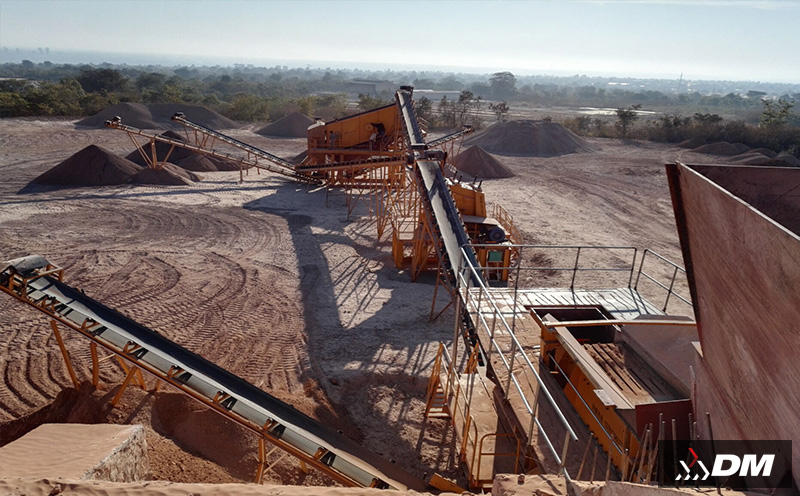
In the demanding world of mining, quarrying, and aggregate production, the primary crushing stage is universally recognized as the heartbeat of the entire operation. Yet, for many site managers and plant owners, this critical stage is also a source of persistent frustration. Common pain points include excessive wear on manganese liners leading to skyrocketing operating costs, unexpected mechanical failures causing costly downtime, and throughput rates that consistently fall short of design specifications. These issues are not merely operational nuisances; they directly erode profit margins and delay project timelines. The root cause often lies in the selection and operation of the fixed jaw crusher, the workhorse of the primary circuit.
Addressing Core Pain Points: Why Underperformance Happens
Many operators mistakenly believe that all jaw crushers are created equal, focusing solely on feed opening dimensions and motor horsepower. However, this superficial approach ignores the critical interplay between material characteristics and machine dynamics. For instance, processing highly abrasive granite or basalt with a standard-duty crusher will result in catastrophic wear rates and potential structural fatigue. Conversely, using an oversized heavy-duty machine for soft limestone results in unnecessary capital expenditure and energy waste. Furthermore, outdated crushing chamber designs can lead to packing and choking, especially when processing materials with high clay or moisture content, effectively strangling production capacity.
Strategic Solutions: Precision Selection Logic
To overcome these challenges, a shift from generic purchasing to application-specific engineering is essential. For high-hardness and high-abrasion applications, such as river pebbles or quartzite, investing in a heavy-duty fixed jaw crusher is non-negotiable. These machines feature reinforced frames, larger diameter eccentric shafts, and premium alloy steel castings designed to withstand immense crushing forces. The robust construction ensures stability and longevity, protecting your investment against the punishing nature of hard rock.
For projects focused on construction waste recycling or urban infrastructure where space is at a premium, one might consider mobile options. However, for long-term, high-volume stationary operations, a properly configured fixed plant remains the king of cost-efficiency. Modern fixed jaw crusher designs incorporate deep crushing chambers with optimized nip angles. This geometry ensures aggressive nip and high throughput while eliminating dead zones. The result is a more cubical product shape and significantly reduced energy consumption per ton. Additionally, hydraulic setting adjustment systems allow for real-time CSS (Closed Side Setting) tweaks without stopping the machine, ensuring seamless integration with downstream cone or impact crushers.
Operational Excellence: Maintenance as a Profit Center
Purchasing the right equipment is only half the battle; operational discipline determines long-term success. A rigorous preventive maintenance program is the shield against unplanned downtime. Centralized automatic lubrication systems should be standard, ensuring bearings are consistently protected from contamination and overheating. Jaw plate management is equally critical. Rotating or swapping jaw plates before they are completely worn out maintains the correct chamber profile and prevents damage to the wedge locking systems.
Feeding practices also play a pivotal role. Segregated feeding or surge bin feeding helps maintain a consistent choke-feed condition, which not only maximizes capacity but also promotes inter-particle crushing, reducing liner wear. For materials with high fines content, installing a scalping screen ahead of the fixed jaw crusher can bypass natural fines, increasing effective capacity by up to 30% and preserving liner life.
ROI Analysis: The Total Cost of Ownership Perspective
When evaluating the financial viability of a fixed jaw crusher, savvy investors look beyond the initial invoice price to the Total Cost of Ownership (TCO). A premium, heavy-duty machine may command a higher upfront cost, but the return on investment is realized through superior reliability and lower operating expenses.
Consider a 500 TPH basalt crushing line. A high-quality fixed jaw crusher with optimized metallurgy can extend liner life by 30-50% compared to standard models. When combined with higher energy efficiency and near-zero unplanned downtime, the annual savings often exceed the initial price premium within the first 18 months of operation. Furthermore, the consistent product gradation reduces the load on secondary crushers, creating a cascading effect of efficiency throughout the entire plant.
In conclusion, the fixed jaw crusher is far more than a simple mechanical device; it is a strategic asset. By aligning equipment selection with specific geological and operational realities, and by adhering to best practices in maintenance and feeding, quarry operators can transform their primary crushing stage from a cost center into a competitive advantage. In an industry where margins are defined by tons per hour and cost per ton, getting the jaw crusher right is the first and most important step toward sustainable profitability. 

Related Articles
Recommended Mobile Crusher Manufacturers
2026-06-04 More+Against the backdrop of continuous expansion of global infrastructure constructi...
Construction Waste Treatment Solutions: Process Design and Equipment Matching Tips
2026-08-31 More+1. Core Pain Points Faced by Current Construction Waste Recycling ProjectsC...
Smart Construction Waste Recycling Drives New Growth
2026-06-16 More+China's urban renewal and waste-free city initiatives are accelerating dema...
What Market Advantages Boost Construction Waste Treatment & Resource Recycling?
2026-06-03 More+Urban reconstruction generates massive construction waste, and construction wast...
Portable Screening on Job Sites: Tracked Screening Machine Guide
2026-08-11 More+Need to produce sized aggregates at multiple job sites without hauling? Learn ho...
Ten Common Failures of Sand Making Machine and Corresponding Solutions
2026-07-02 More+In the modern manufactured sand production industry, sand making machine serves ...
Manufactured by Source Factory | Shanghai Dongmeng Builds Reliable Sand & Aggregate Production Line for You
2026-07-23 More+set of trustworthy, high-efficiency complete sand crushing & screening equip...
Focus on Mobile Crushers in Mining Machinery
2026-07-29 More+In the global mining machinery industry, mobile crusher reshapes the traditional...
How to Maintain a Vibrating Screen?
2026-09-27 More+The vibrating screen is the core screening equipment in sand, aggregate and mini...
Major Changes in the Sand & Aggregate Industry in 2026: Compliance First, Quality Wins — Dongmeng Helps Enterprises Seize New Opportunities
2026-07-23 More+In 2026, the sand and aggregate industry is undergoing three major transformatio...