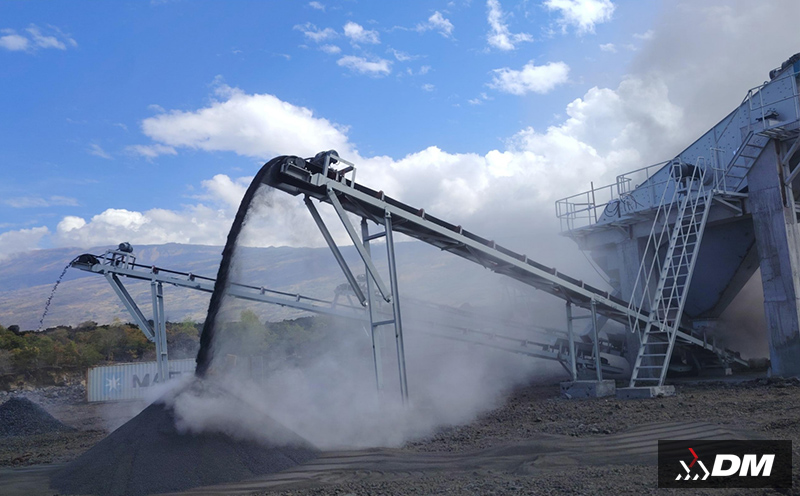
In every quarry and aggregates plant, the screening stage is the gatekeeper of product quality and a major determinant of overall throughput. Yet it is often overlooked in favor of the more visible crushers upstream. When a screening machine is undersized, poorly configured, or nearing the end of its life, it quietly erodes plant performance—causing bottlenecks, off-spec product, excessive recirculation, and higher cost per tonne. For stationary quarry operations focused on long-term, high-volume production, upgrading to a modern, high-efficiency fixed screening machine is one of the highest-return investments a plant can make.
The Pain Point: Screening Bottlenecks Kill Productivity
Many operators underestimate how much the screening stage limits their plant. Common symptoms include: throughput that never reaches design capacity even when crushers are running fine; finished fractions that fail gradation tests due to cross-contamination between decks; screen media that blinds or pegs constantly, requiring frequent cleaning stops; and high recirculating loads that force crushers to reprocess material they should have already passed. Each of these issues adds cost and reduces saleable output, and together they can easily shave 10 to 20 percent off effective plant capacity. The problem is often not the crushers—it is the screening that cannot keep up.
The Solution: High-Efficiency Stationary Screening for Maximum Throughput
The Shanghai Dongmeng Group fixed screening machine is engineered for continuous, high-capacity duty in permanent quarry and mining operations. Built with heavy-duty construction and optimized vibration dynamics, it delivers sharp, efficient separation at high tonnage rates, day after day.
- Multi-deck flexibility: Available in two-, three-, and four-deck configurations, a single machine can produce several sized fractions simultaneously, reducing the number of screening units and simplifying plant layout.
- Optimized vibration and stroke: Adjustable amplitude, frequency, and screen angle allow precise tuning to the feed material, minimizing blinding and maximizing stratification for cleaner separation.
- Wide range of screen media: Woven wire, polyurethane, rubber, and punch plate options match the application—polyurethane for wet, sticky feeds that tend to blind; heavy-duty wire for dry, abrasive rock.
- Heavy-duty, low-maintenance design: Robust side plates, reinforced decks, and durable vibrator mechanisms are built for years of continuous service with minimal downtime.
When installed after a primary fixed jaw crusher and secondary fixed cone crusher or impact crusher, the screening machine completes a balanced, high-efficiency stationary line that delivers consistent, in-spec product at maximum tonnage.
Application Scenarios: The Heart of Every Stationary Plant
A fixed screening machine is essential across virtually all stationary aggregate and mining operations. In quarrying, it performs final sizing of crushed stone into commercial fractions for concrete, asphalt, road base, and drainage applications. In mining, it separates ore from waste rock, classifies mill feed, and sizes finished product. It also handles scalping ahead of crushers to remove fines and protect downstream equipment, pre-screening to improve crusher efficiency, and dewatering of washed aggregates. Whether the plant produces sand, gravel, crushed stone, or processed ore, the screening stage defines what the customer receives.
Customer Benefits: More Tonnage, Better Product, Lower Cost
Upgrading to a high-performance fixed screening machine delivers benefits across the board. First, higher throughput: a properly sized, efficient screen removes the bottleneck at the classification stage, allowing crushers to run at full capacity and pushing more saleable product out of the plant. Second, better product quality: sharp separation means each fraction stays within spec, reducing rejected loads, customer complaints, and discount pricing. Third, lower operating cost: reduced recirculation means crushers do less rework, cutting energy and wear costs per tonne. Fourth, less downtime: modern screen media and robust construction mean fewer cleaning stops and longer intervals between maintenance. The combined effect is a plant that produces more, sells at a higher price, and costs less to run.
Selection Logic: Size the Screen to the Plant, Not the Other Way Around
Selecting the right fixed screening machine is a matter of matching the machine to the feed and the product. Key factors include: feed rate—the screen must handle the maximum tonnage the crushers can produce, with margin for surge loads; number of fractions—more products mean more decks and more screen area; feed gradation—the proportion of near-size particles strongly influences required screen area; material characteristics—moisture, abrasiveness, and particle shape affect media choice and vibration settings; and plant layout—available space, height, and integration with upstream and downstream equipment. It is always better to oversize slightly than to undersize, because a screen that is too small becomes an immediate bottleneck. Shanghai Dongmeng Group works with producers to analyze their feed, product targets, and plant layout to recommend the optimal screening solution.
Operation and Maintenance: Keep It Clean, Keep It Tuned
Screening efficiency degrades gradually, so it is easy to miss until the problem is severe. A proactive maintenance program protects both performance and longevity. Daily tasks include visual inspection of screen media for wear, blinding, and damage, plus quick cleaning of clogged openings. Weekly tasks include checking vibrator bearings, lubrication levels, spring condition, and bolt torque. Monthly tasks involve more thorough inspection of deck frames, side plates, and support structures. Operators should also periodically re-tune stroke, speed, and deck angle as feed conditions change, to maintain peak efficiency. The machine's accessible design and modular components make maintenance straightforward, and Shanghai Dongmeng Group provides a full range of replacement media and parts to keep screens running at their best.
Return on Investment: Screening Upgrades Pay Fast
For plants where screening is a known bottleneck, upgrading the fixed screening machine often delivers one of the fastest paybacks in the entire operation. The gains—higher throughput, better product price, lower recirculation cost, and reduced downtime—compound every day the plant runs. In many cases, the upgrade pays for itself within the first year through increased output and reduced cost per tonne. Because the machine serves for many years, the return continues to compound over the life of the plant, making screening upgrades one of the smartest capital investments an operator can make.
Conclusion
The screening stage may not always get the most attention, but it has an outsized impact on plant performance and profitability. A modern, well-configured
fixed screening machine unlocks hidden capacity, improves product quality, and lowers operating cost—all at once. For quarry and mining operators running stationary plants, upgrading the screening stage is one of the most direct paths to higher throughput, better margins, and stronger competitive position. Shanghai Dongmeng Group helps producers design, select, and maintain high-efficiency screening solutions that turn the classification stage from a bottleneck into a competitive advantage—delivering more tonnes, better product, and lower cost for years to come.


Related Articles
What does construction waste include? What impacts does it have on the environment?
2026-04-24 More+Construction waste mainly refers to solid waste generated during building constr...
How to Choose Crusher Manufacturers: 2026 Purchasing Guide and Strength Screening Tips
2026-09-04 More+1. Introduction: Selecting the Right Crusher Manufacturers Is Critical for Long‑...
Boost Quarry Profit with Fixed Cone Crushing
2026-07-07 More+A practical guide for quarry and aggregate producers on using a fixed cone crush...
Shanghai Dongmeng Wheeled Mobile Crushing Plant: High-efficiency and Low-cost Solutions for the Sand and Solid Waste Industry in 2026
2026-06-10 More+In 2026, China’s sand production, mining, and construction waste recycling indus...
Concrete Crushing Machine: A Detailed Introduction to Core Crushing Equipment for Global Aggregate and Solid Waste Treatment
2026-07-09 More+In global mining exploitation, aggregate processing, construction waste recyclin...
The key player in gravel processing in the mining industry is the tire‑mounted mobile crusher
2026-09-03 More+Tire‑mounted mobile crusher has become one of the most essential pieces of equip...
Turn Demolition Waste into Profit with a Mobile Impact Crusher
2026-07-10 More+Struggling with high disposal fees and strict site limits in construction waste ...
Major Changes in the Sand & Aggregate Industry in 2026: Compliance First, Quality Wins — Dongmeng Helps Enterprises Seize New Opportunities
2026-07-23 More+In 2026, the sand and aggregate industry is undergoing three major transformatio...
Centralized Construction Waste Disposal Solution: Complete Matching Equipment Scheme From Dongmeng
2026-08-20 More+Against the background of global urban renewal and strict environmental‑protecti...
Smart Construction Waste Recycling Drives New Growth
2026-06-16 More+China's urban renewal and waste-free city initiatives are accelerating dema...