
How to Maintain a Vibrating Screen?
2026-09-27

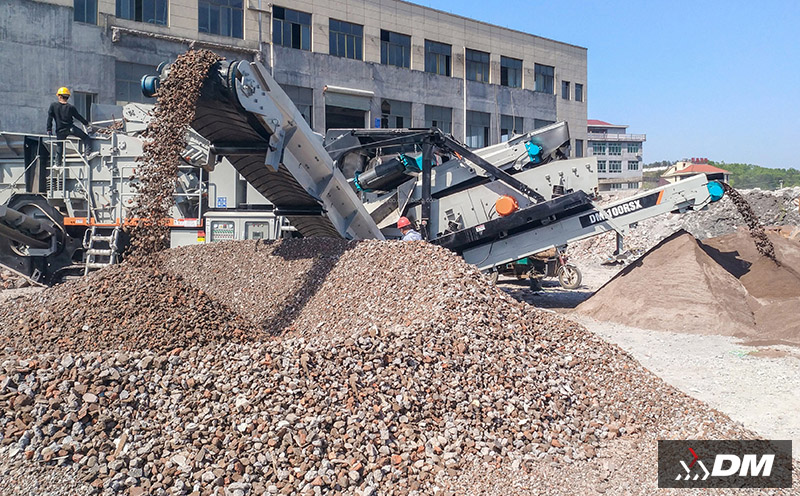
China's construction industry is entering a new development cycle in 2026. Instead of large-scale expansion, the focus has shifted toward urban renewal, industrial upgrading, and sustainable infrastructure development.
Across many cities, projects such as:
are generating enormous volumes of construction and demolition waste.
For project investors and recycling operators, this presents both challenges and opportunities.
The key question is no longer:
"How do we dispose of waste?"
But rather:
"How do we turn waste into valuable resources?"
Under China's dual-carbon goals and Waste-Free City strategy, Construction Waste Recycling has become an important part of the circular economy.
Traditional landfill disposal is becoming less sustainable due to several reasons.
Urban land resources are increasingly scarce, making landfill development more expensive.
Many cities have implemented:
As a result, conventional disposal methods face growing compliance pressure.
Meanwhile, Construction Waste Recycling Plants create value by converting waste into reusable materials.
Typical construction waste contains:
After crushing, screening, and sorting, these materials can be transformed into:
This transition from disposal to recycling is creating entirely new business models.
A recent urban renewal project in Eastern China demonstrates the growing potential of Construction Waste Recycling.
Maximum size:
≤1000 mm
The recycling plant included:
Capacity:
350–420 TPH
Daily operation:
10 hours
Annual processing volume:
Over 1 million tons
Resource recovery rate:
More than 88%
Compared with landfill disposal, the project significantly reduced transportation costs while generating revenue from recycled products.
As China promotes green building materials and sustainable construction, recycled aggregates are gaining wider acceptance.
Applications include:
Used for:
Recycled materials support permeable infrastructure construction.
Developers increasingly seek low-carbon materials to meet sustainability standards.
Compared with natural aggregates, recycled products often provide:
These advantages are becoming increasingly attractive to project owners.
The next generation of Construction Waste Recycling Plants is becoming smarter.
Modern facilities increasingly integrate:
Separating:
Providing real-time production and maintenance data.
Improving environmental performance.
Reducing labor requirements while increasing efficiency.
For operators facing labor shortages and rising costs, automation is quickly becoming essential.
As market competition intensifies, successful recycling projects will depend on:
Reducing long-term operating expenses.
Increasing product value.
Meeting future regulations.
Improving plant efficiency.
China's construction waste industry is moving from simple disposal toward high-value recycling. For investors, building a modern Construction Waste Recycling Plant is no longer just an environmental responsibility—it is becoming a long-term business opportunity.
Shanghai Dongmeng remains committed to providing advanced crushing, screening, and recycling solutions that help customers achieve sustainable growth and maximize resource value.
Related Articles