
How to Maintain a Vibrating Screen?
2026-09-27

In road construction aggregates, volume matters, but specification matters more. A producer can move thousands of tons per week and still lose profitable business if the finished material does not meet the shape, gradation, and consistency required by asphalt plants, paving contractors, or infrastructure owners. That is why many aggregate businesses eventually realize that the issue is not simply how much stone they can crush. The issue is whether they can produce high-value material consistently enough to win repeat orders.
This challenge is especially common in limestone and medium-hard rock operations serving highways, municipal roads, airport pavements, and industrial park infrastructure. The plant may already have reserve capacity. The quarry may be close to market. Demand may be strong. Yet complaints continue: flaky particles, variable fines content, poor coating performance in asphalt mixes, and frequent adjustments downstream. In many cases, the plant is technically producing stone, but not producing the right stone.
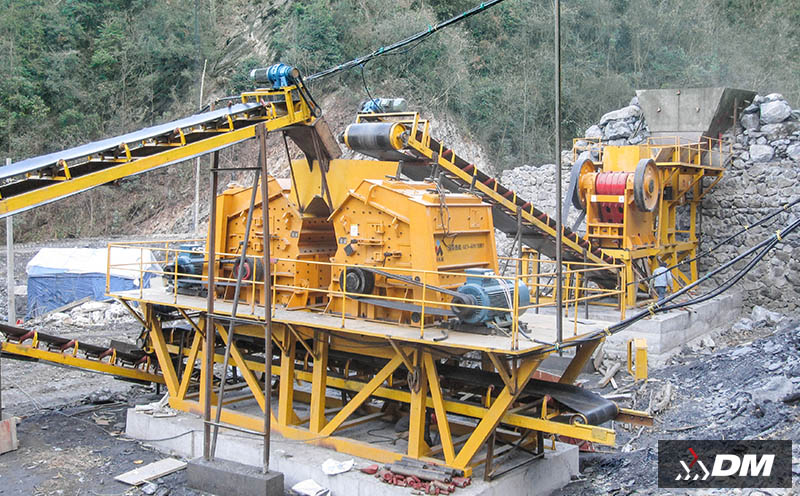
For those operations, a fixed impact crusher can be a highly effective part of the solution. Not because it is a generic substitute for every crushing stage, but because it can address shape quality, reduction behavior, and product consistency in ways that directly affect the commercial value of road aggregates. Buyers who focus only on machine tonnage miss the bigger point. In road material production, crushing strategy determines market position.
Supplying road stone is not the same as supplying general fill or low-spec construction material. Asphalt plants need reliable shape and gradation because mix performance, compaction behavior, binder coating, and final pavement durability all depend on aggregate quality. Contractors do not want to keep changing plant settings or blending ratios to compensate for unstable input material. They want feed they can trust.
That means the aggregate producer is judged not only by output but by consistency. A shipment that looks acceptable one week and unstable the next can damage customer confidence quickly. In competitive markets, especially where multiple quarries serve the same infrastructure region, buyers often shift toward the supplier who delivers fewer surprises.
A fixed impact crusher becomes relevant in this context because it supports the production of better-shaped aggregate for many road applications, particularly when processing suitable limestone or similar feed materials. It is not merely a crushing device in the line. It is a tool for improving final product value.
Many producers assume that if they want to grow revenue, they need more capacity. Sometimes that is true. But in premium aggregate markets, more tons of average material may be less profitable than fewer tons of better material. If the existing line produces excessive elongated particles, unstable fines, or poor product distribution, then increasing throughput can actually magnify the problem.
A typical plant symptom is this: the quarry can blast enough stone, the feeders run well, and the site appears busy, but high-margin road aggregate products remain difficult to control. The sales team hears quality questions. The asphalt plant requests tighter limits. The operations team responds by adjusting screens, blending stockpiles, or recirculating more material. Costs rise, but the core issue remains unresolved.
In such cases, the fixed impact crusher should be evaluated from the perspective of plant objectives, not from the perspective of generic equipment replacement. If the goal is to produce a stronger commercial product with more cubical shape and better downstream usability, then the crusher choice affects not just operations but the sales mix.
The strength of a fixed impact crusher in suitable applications lies in how it breaks material and shapes the product. For aggregate suppliers focused on road construction, that can translate into improved particle geometry, better control of marketable fractions, and reduced dependence on corrective reprocessing. When the plant is designed around quality rather than raw tonnage, these benefits become financially meaningful.
A fixed installation also brings important advantages for long-term road aggregate production. If the quarry serves a stable market and operates from a defined site with predictable reserve life, a fixed solution can offer structural stability, integration with feeding and screening systems, and easier coordination with dust suppression, automation, and stockpile handling. The result is not just a crusher on a base. It is a production platform optimized for repeatable output.
That matters because asphalt customers value consistency. If a producer can deliver material that requires fewer mix design corrections and creates fewer paving concerns, the commercial relationship becomes stronger. The value of a fixed impact crusher is therefore closely tied to customer retention and product reputation, not only to technical plant layout.
One of the clearest use cases is a limestone quarry supplying state highway and municipal asphalt projects. The plant may need to produce multiple road stone sizes while maintaining shape quality over extended production periods. In that case, a fixed impact crusher can support a stable process that is easier to tune around target products.
Another scenario is an aggregate company upgrading from lower-spec construction sales toward higher-value road materials. The existing line may already move acceptable tonnage into general markets, but management wants to improve margin by serving asphalt plants more consistently. Instead of expanding blindly, the company can invest in a crushing stage that improves product quality at the source.
A third scenario is a vertically integrated road contractor that wants tighter control over aggregate supply. Rather than relying completely on outside suppliers whose material varies from batch to batch, the contractor or affiliated producer can use a fixed impact crusher to build a more reliable internal source of quality stone for pavement works.
The most visible customer benefit is improved product acceptance. Better-shaped aggregates are easier to position in asphalt and road construction markets because they support performance and process stability. But the commercial impact goes further. When aggregate quality is more predictable, sales teams can negotiate with greater confidence, plant managers spend less time firefighting, and customers are more willing to commit to repeated orders.
There is also a process-control benefit. A fixed impact crusher integrated into a well-designed plant can reduce the frequency of reactive adjustments downstream. Screens, conveyors, and stockpile handling work better when the crusher output is more consistent. Over time, that can support smoother production scheduling and better use of labor.
The reputational benefit should not be underestimated either. In infrastructure markets, reliability matters. If a supplier becomes known for delivering road stone that performs well in asphalt production, that reputation can create a meaningful competitive edge.
Buyers should begin with the end market. Are they targeting asphalt plants, base course, general construction, or a mix of segments? If the priority is premium road aggregate, then the evaluation criteria must reflect that objective. The right fixed impact crusher is the one that fits the feed material, target gradation, and quality expectations of the intended customers.
Feed material suitability is critical. Not every geology calls for the same solution, and buyers should assess abrasiveness, strength, moisture, and required output sizes carefully. Plant integration also matters. The crusher must work with the feeders, screens, conveyors, and stockpile layout already in place or planned for the new facility.
Long-term operating strategy is another major factor. A fixed installation is most compelling where the site has stable reserves, a continuous market, and a long enough project horizon to benefit from a structured plant layout. In those conditions, the fixed impact crusher can become part of a durable, optimized system rather than a standalone equipment purchase.
A good crushing choice still requires disciplined operation. To keep a fixed impact crusher delivering high-value product, the plant needs controlled feed conditions, regular wear monitoring, and a maintenance schedule built around performance stability rather than failure response. Waiting until shape quality deteriorates or product balance shifts too far can result in avoidable rework and customer complaints.
Operators should watch wear parts closely because product quality and operating cost are both affected by condition. They should also monitor the relationship between crusher settings, screen performance, and final stockpile quality. In premium road aggregate production, maintenance is not simply about keeping the machine running. It is about keeping the product within market expectation.
Dust control, housekeeping, and process visibility are also important in fixed plants serving long-term road markets. Cleaner and more stable operations support not only uptime but customer confidence during site visits and audits.
The return on investment from a fixed impact crusher often comes from quality-driven revenue rather than capacity-driven volume alone. If the plant can convert more of its output into higher-value asphalt stone, reduce customer rejection risk, and lower the need for rehandling or corrective processing, the business case becomes stronger quickly.
This is especially relevant where road construction demand is strong and infrastructure clients expect dependable supply. A producer that can consistently deliver specification-friendly aggregate may achieve better pricing, stronger customer loyalty, and a more resilient market position. In that setting, crusher investment should be measured against long-term margin improvement, not simply initial capital cost.
For aggregate producers serving road construction, the question is not whether they can crush enough stone. The question is whether they can produce the right stone, at the right consistency, for the right market. That is a commercial and technical challenge at the same time.
A fixed impact crusher can play a central role in solving that challenge when the objective is premium asphalt aggregate from suitable feed material. It supports better particle shape, stronger process stability, and a more valuable end product. For businesses looking to move beyond tonnage and compete on quality, the fixed impact crusher is often one of the smartest ways to strengthen both plant performance and market credibility.
Related Articles
Jaw crusher host suddenly shut down? Don't be afraid! First check to see if it is due to these reasons!
2026-07-15 More+In global mining, aggregate processing and construction waste recycling industri...
Construction Waste Recycling Plants Become a Key Part
2026-06-09 More+How Urban Renewal Is Creating New Opportunities for Construction Waste Recycling...